2021 Session 4: Heritage Preservation and the Journey of the Sailing Vessel Free China
Session 4 Abstract
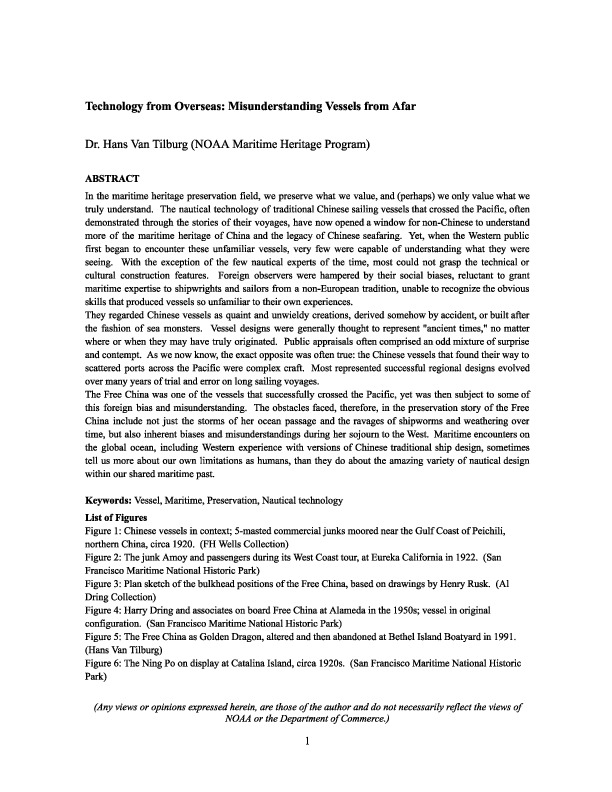
The history and culture of Chinese sailing activities dates back through millennia. The greater part of this oceanic legacy was never written down, but is sometimes revealed indirectly through artistic works or through examples of traditional sailing vessels, whether afloat or on the bottom of the sea. For seafaring cultures everywhere, traditional sailing vessels were built of wood, and are ephemeral in the marine environment. Intact traditional wooden sailing boats older than 100 years or so are very rare physical records of the knowledge and skills of past shipwrights. Rarer still is accessible first-hand knowledge of the experience and sailing qualities of traditional vessels like Chinese coastal merchant boats from the central China coast.
The National Museum of Marine Science and Technology is in possession of something remarkably rare: an original traditional Chinese sailing vessel from Fujian Province. The journey of the Free China, from her origins in the salt fish trade along the China coast, to her entry in the transatlantic New York-to-Sweden race, encompassing a bold transpacific voyage and subsequent extended sojourn in California, and then her final rescue by a volunteer non-profit society, provides a note of optimism among the many historic preservation efforts ongoing in the maritime field. This session features the story of the Free China as told by the fishermen, sailors, scientists, historians, film makers, and preservationists who had a role to play in the journey of this rare vessel from the past.
Session Organisers:
Dr. Paul Chow
Dr. Hans Van Tilburg
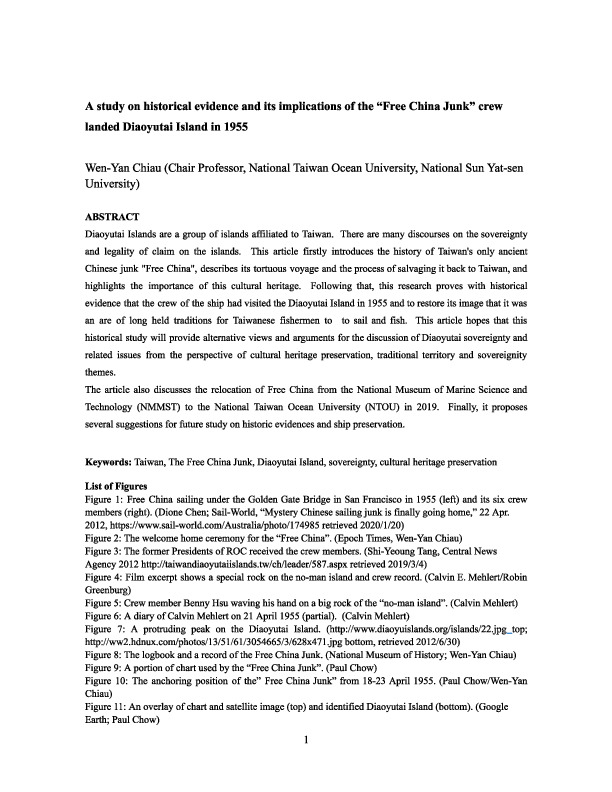
A study on historical evidence and its implications of the “Free China Junk” crew landed Diaoyutai Island in 1955
By Wen-Yan Chiau
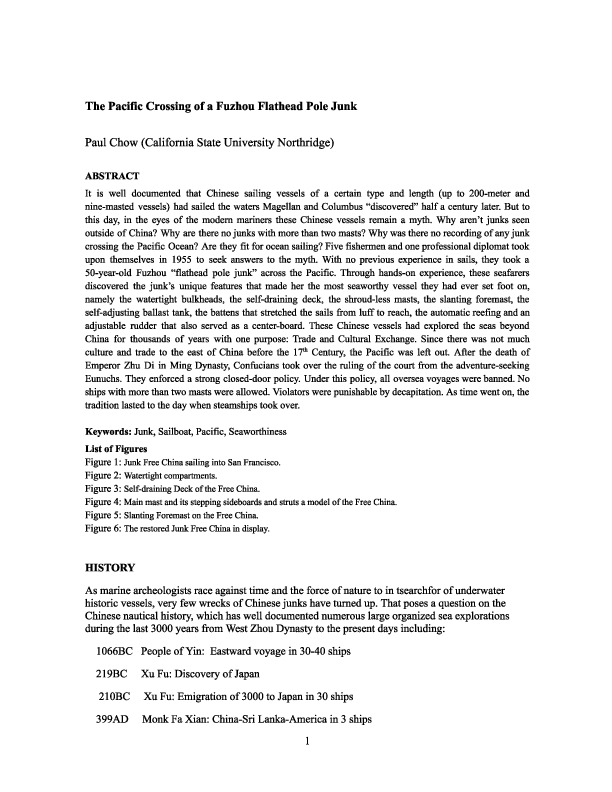
The Pacific Crossing of a Fuzhou Flathead Pole Junk
By Paul Chow