
APCONF 2020 Preliminary Sessions
Recordings of: Welcoming remarks, Keynote 1, Session 2, Session 9
Recordings of: Keynote 2, Session 8, Session 13, Session 4, Closing Ceremony
Recordings of: Welcoming Remarks, Keynote 1, Session 6, Session 11, Session 14, Session 3
Recordings of: Keynote 2, Session 7, Session 1, Session 12, Closing Ceremony
Session 1: Asia-Pacific Maritime Cultural Landscape: an Austronesian Cultural Identity?
Abstract
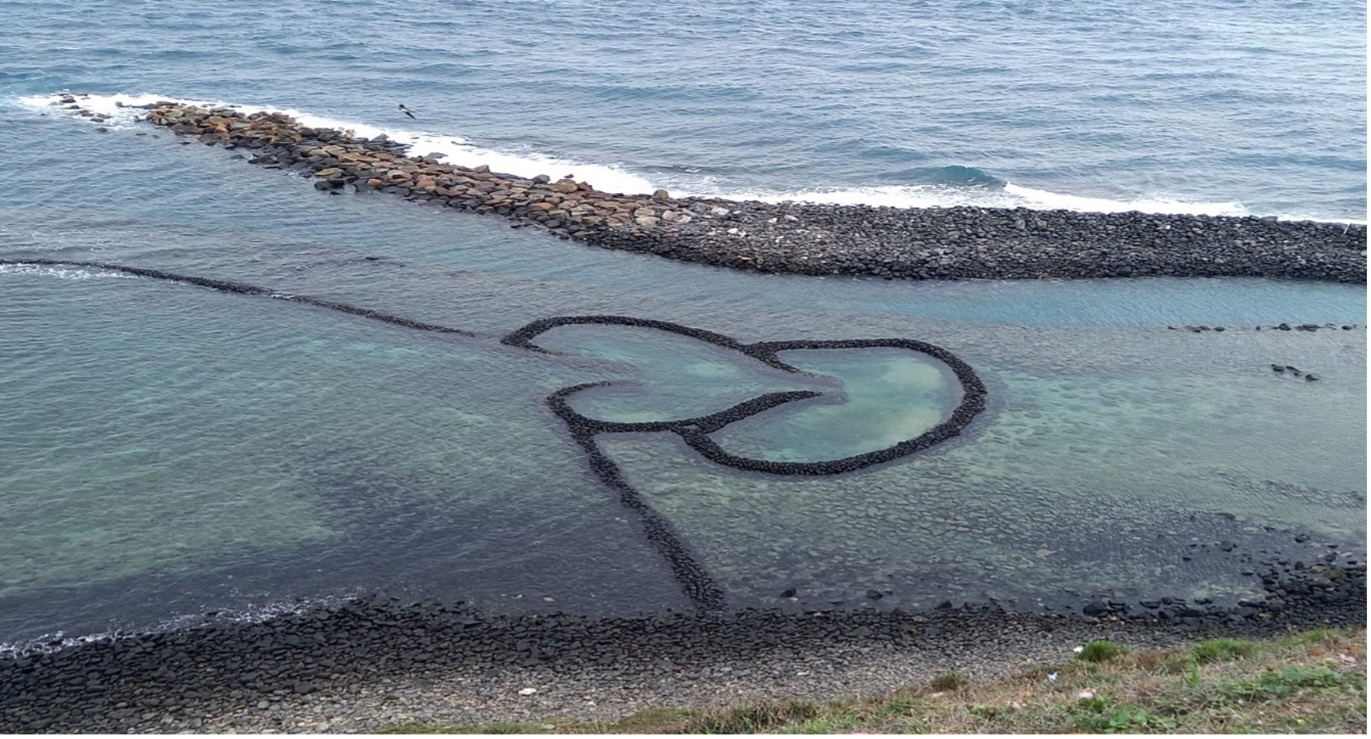
This session will bring together community individuals, archaeologists, historians, ecologists and others to discuss and interpret the many methods used by indigenous people to catch fish. Fish weirs and traps have been used for hundreds/thousands of years and many have been designed and utilised in a sustainable and environmentally harmonious manner. While various examples and styles can be found across the region, the similarity in the spiritual, ritual, cultural and social connections could suggest a broad regional connection. Does this Cultural Landscape and all that it entails—the tangible and living heritage (intangible heritage)—provide a regional Cultural Identity for the people involved?
Session organisers seek papers and presentations that will further this research through reporting on fish weir studies across the Asia-‐Pacific region, in addition to comparative research implemented elsewhere. Papers are also sought on associated cultural anthropological studies and any investigations into related terrestrial and maritime archaeological sites, in addition to those studies that provide a broad understanding of traditional coastal settlement and marine management.
Session Organisers:
Professor Ming-‐Ju Lee
Dean of Research & Development
National Penghu University of Science and Technology, Taiwan
mjlee@gms.npu.edu.tw
Dr. Meihua Shao
Independent Researcher, Taiwan
shao3333@hotmail.com
Dr. Bill Jeffery
Assistant Professor, Anthropology
University of Guam
billfjeffery@gmail.com
Magda Nowakowska
Session 2: History and Current Trends of Underwater Archaeology around East Asia
Abstract
East Asia is extremely rich in underwater cultural heritage, such as conventional shipwrecks under the sea, submerged settlement sites on the bottoms of inland lakes and rivers, or prehistoric shell mounds and stone tidal weirs along coastal zones. Many shipwrecks or their cargos have been discovered by underwater archaeologists one after another in the waters, and each nation has moved forward with its own underwater archaeological policy and numerous underwater projects both on governmental and grassroots levels. On the other hand, no East Asian country has ratified the UNESCO 2001 Convention yet. In this area, the document-based historical study or terrestrial archaeology has a long tradition, which has had a noteworthy impact upon underwater archaeology and its methodology. Recently, in addition, the technological advancement in underwater survey has remarkably been made; using remote-sensing with satellites, robotics for ROVs or AUVs, or 3D photogrammetry by computer softwares mitigates or cancels the limitations regarding accessibility and working time caused by underwater environment. The tie between such modern technologies and traditional archaeology or history has minted new applications and perspectives of underwater cultural heritage study. The multi-disciplinary or holistic approaches are increasingly more and more necessary among East Asian researchers.
Session Organisers:
Prof. Dr. Akifumi Iwabuchi
Tokyo University of Marine Science and Technology
iwabuchi@kaiyodai.ac.jp
Dr. Kotaro Yamafune
APPARATUS, LLC
koutarou_yamafune_0321@yahoo.co.jp
Session 3: Sustainable Development of Underwater Cultural Heritage in the Asia‐Pacific Region
Abstract
The archaeological community seems to acknowledge the touristic side of the underwater cultural heritage but only if is not incompatible with the protection and management of underwater cultural heritage. In fact, the 2001 UNESCO Convention on the Protection of the Underwater Cultural Heritage highlights the importance of public awareness and public enjoyment of the underwater cultural heritage. This is implicitly pointing out the necessity of a sustainable use of this heritage: it tries to balance the desire to conserve and protect versus the desire to exploit. However, while it has been accepted that the heritage needs to be available to all, its availability sometimes could threat its integrity: mass tourism can bring pollution, economic exploitation and mass transit.
Sustainability means living in a way that do not endanger the life chances of people alive tomorrow by exhausting the earth’s resources and destroying its environment. In our case, it means enjoying the underwater cultural heritage today in a way that do not endanger it for tomorrow. However, underwater cultural heritage can be places to visit and learn, giving economic benefits to local communities. New options have to be developed for making underwater cultural heritage accessible to all since involving society is not only necessary but also a good way to preserve the underwater cultural heritage.
This session seeks to find proposals where the management of underwater cultural heritage complies with a sustainable development: to provide education, protection and accessibility. The Asia‐Pacific Conference on Underwater Cultural Heritage is the perfect scenario to keep an open mind to attract new ideas where not only the preservation of the underwater heritage but also its enjoyment by all can become a reality: the sustainable use of underwater cultural heritage is possible.
Session organiser:
Dr Elena Perez‐Alvaro
Licit Cultural Heritage Ltd
elenaperezalvaro@gmail.com
Session 4: Heritage Preservation and the Journey of the Sailing Vessel Free China
Abstract
The history and culture of Chinese sailing activities dates back through millennia. The greater part of this oceanic legacy was never written down, but is sometimes revealed indirectly through artistic works or through examples of traditional sailing vessels, whether afloat or on the bottom of the sea. For seafaring cultures everywhere, traditional sailing vessels were built of wood, and are ephemeral in the marine environment. Intact traditional wooden sailing boats older than 100 years or so are very rare physical records of the knowledge and skills of past shipwrights. Rarer still is accessible first-hand knowledge of the experience and sailing qualities of traditional vessels like Chinese coastal merchant boats from the central China coast.
The National Museum of Marine Science and Technology is in possession of something remarkably rare: an original traditional Chinese sailing vessel from Fujian Province. The journey of the Free China, from her origins in the salt fish trade along the China coast, to her entry in the transatlantic New York-to-Sweden race, encompassing a bold transpacific voyage and subsequent extended sojourn in California, and then her final rescue by a volunteer non-profit society, provides a note of optimism among the many historic preservation efforts ongoing in the maritime field. This session features the story of the Free China as told by the fishermen, sailors, scientists, historians, film makers, and preservationists who had a role to play in the journey of this rare vessel from the past.
Session Organisers:
Dr. Paul Chow
California State University Northridge
Paul.chow@csun.edu
Dr. Hans Van Tilburg
NOAA Maritime Heritage Program
Hans.vantilburg@noaa.gov
Session 5: Visitors and Local Waters: Foreign Fishermen and Indigenous Labour and Resources
Abstract
A common historical theme across SE Asia was the appearance of maritime visitors who worked local waters, exploited its resources and interacted with local people. For example in the Arafura Sea foreign fleets engaged in fishing and harvested trepang, pearl, pearl shell and trochus shell. Whether these industries were short-lived or longer term the social, cultural and natural impacts could be considerable. Servicing international markets saw the intensification of industry with new trade networks, new technologies, new systems and competition between local and foreign fishermen. In some cases demand for labour resulted in negotiation and collaboration, and in other cases conflict and forced labour, the latter seen in the Sulu Zone of the Sulu and Celebes Seas.
This session explores the archaeological evidence of these marine industries and those that worked them, from collection to processing, to storage, to transport. Evolution of ship design, the use of new technologies and the coastal archaeology of collection and processing are considered, as is evidence of local knowledge and indigenous systems of marine exploitation. This session explores the archaeological evidence of maritime industries through the activities of the visitor and the local.
Session Organiser:
David Steinberg, PhD Candidate
University of New England, Australia
david.steinberg.darwin@gmail.com
Session 6: The Maritime Archaeology of Trade and Exchange in East Asia
Abstract
East Asia has a long history of maritime trade and exchange stretching back millennia. The earliest evidence dates to China’s Han Dynasty (206 BCE-220 CE) when Emperor Wu sent a group of envoys carrying gold and silk to Southeast Asia in 111 BCE.
This session is intended to provide a forum for researchers from maritime archaeology, underwater cultural heritage, and related disciplines, to exchange ideas, present new research and explore future challenges in the identification, investigation, protection, conservation, curation and display of maritime archaeological sites and material in East Asia, which bears evidence of trade and exchange.
In keeping with the Conference theme, ‘UCH in Asia-Pacific: Regional Studies and Projects’, the focus of The Maritime Archaeology of Trade and Exchange in East Asia will be on Underwater Cultural Heritage in East Asia, including regional studies and collaborative projects.
As such, we invite researchers working in Eastern Russia, Korea, China, Japan, Taiwan, Hong Kong, Vietnam and the Philippines to showcase ground breaking research, new discoveries, emerging technologies and innovative methods in:
– exploration and discovery;
– survey and recording;
– excavation and recovery;
– conservation;
– curation; and
– display;
of sites in East Asia, and reveal how, together, these are providing new information about the East Asian maritime realm that is changing our understanding of human history, and creating opportunities for interdisciplinary collaboration beyond national boundaries.
Session Organisers:
Sarah Ward
Visiting Professor of Maritime Archaeology
Centre for Maritime History and Culture Research
Dalian Maritime University, Dalian, China
sarahward@dlmu.edu.cn
Jung Young-Hwa
Senior Curator, National Maritime Museum Taean
West Sea Cultural Heritage Division
National Research Institute for Maritime Cultural Heritage, Taean, Korea
pkm228@korea.kr
Session 7: Submerged War Heritage in the Asia-Pacific Region
Abstract
While evidence of conflict in the Asia-Pacific Region dates back thousands of years, World War II brought more people into contact with the seas of the Asia-Pacific region than ever before and left a correspondingly large archaeological signature. Today, the ship and plane wrecks, maritime infrastructure and underwater dumping sites from WWII present an archaeological resource of conflicting values ranging from artificial reefs and tourism assets, to war-graves and even ecological threats. Most recently, the different values placed on these sites has been thrown into sharp relief with the illegal salvage of a number of naval ships in South-East Asia and subsequent outcry from former colonial powers.
Maritime warfare throughout the Asia-Pacific Region has had a far-reaching impact on the people who lived, and continue to live in these areas that goes beyond the mere recording of battlefields and the machinery involved. Maritime archaeology has significant potential to provide insights into the lives and experiences of those who have been overlooked by traditional war histories including non-combatants and indigenous people.
The protection and management of World War II-related Underwater Cultural Heritage (WWII UCH) provides particular challenges in the contemporary Asia-Pacific Region. While the 2001 UNESCO Convention provides a code for internationally recognised best practice, most countries in the region are yet to become signatories. Many countries in Oceania in particular see the current interest in WWII UCH as overshadowing the need to protect and preserve indigenous UCH. A potentially useful framework that could be used to provide a balance in interests and benefits for more of the Asia-Pacific community is the United Nations Sustainable Development Goals that provide a holistic and relevant path for incorporating all UCH into sustainable environmental and development policies and practices. This should lead to an appreciation of all that constitutes Asia-Pacific UCH and their particular challenges.
Session Organisers:
Matt Carter
Research Director
matt.carter@majorprojects.org.au
Bill Jeffery, PhD
Assistant Professor, Anthropology
University of Guam
billfjeffery@gmail.com
Hans Van Tilburg, PhD
Maritime Heritage Coordinator
Pacific Islands Region, NOAA, Hawai`i
hans.vantilburg@noaa.gov
Session 8: Underwater and Maritime Archaeology in South East Asia
Abstract
South East Asia is an Asian Sub Region with 11 countries with an area of 8.94 million square kilometres, and its water areas covering the China Sea, the Java Sea, the Sulu Sea, the Philippine Waters, the Celebes Sea, the Banda Sea, the Flores Sea, the Arafura Sea, the Timor Sea, and the Andaman Sea. With a total area of 2.5 % of the surface of all oceans in the world, South East Asia is a large sub region in the world which its waters and coastal areas are very rich in underwater and maritime cultural heritage. Underwater heritage in South East Asia are diverse and come from various times, namely from ancient Southeast Asian kingdoms, the European colonialism period, to World War II, which consisted of traditional ships of the South East Asian countries, Chinese junks China, Spanish Galleons and Naos, ships from the Middle East, VOC and EIC vessels; historic ships, planes, submarines during World War II; and also the remains of human settlements in the past or submerged landscape.
The session will explore the richness of maritime history and the legacy of underwater and maritime cultural heritage in the countries of South East Asia. This South East Asian Session also seeks papers to be presented on the current development of underwater and maritime archaeology in South East Asia including the latest results of researches, studies, and projects of protection, preservation, sustainable use of underwater heritage, and the development of innovation and technology applying in the fields of underwater and maritime archaeology in various institutions in South East Asian countries. Moreover, the challenges, current threats, and any shortcomings that are currently being hot issues facing by South East Asian countries regionally, such as massive plundering of historic wrecks, destructive activities on shipwreck sites, natural disasters affecting underwater and maritime heritage, lack of long-term site monitoring and inappropriate management of underwater heritage will also be the focus of discussion in this session. This South East Asian Session also encourages the presentation of studies or projects on community engagement and opening access for the public in managing a sustainable underwater heritage in South East Asian countries, where the role of the local community is significant and can assist in determining the sustainability or the destruction of underwater and maritime heritage sites.
Session Organiser:
Nia Naelul Hasanah Ridwan
Research Institute for Coastal Resources and Vulnerability
Ministry of Marine Affairs and Fisheries, Indonesia
niahasanah79@gmail.com
Session 9: Museums, Public Outreach and Conservation
Abstract
Trade along the Maritime Silk Road has been going on for many centuries. Museum collections show a visible record of objects that were traded and historical sources provide important information of how this developed over time. Since the 1970’s many shipwrecks have been discovered that give an even better understanding of this intricate network. While more and more of these shipwreck are now being excavated in an archaeological manner, in the past most of them were salvaged for mainly commercial purposes. Many of these pieces have end up in museum collections. In this session several museums and institutions will give their approach on how they present this material, whether from an archaeological excavation, a commercial salvage or both. Which issues are addressed and what message do they convey to a wider public? The Princessehof will present about their current exhibition Sunken Treasures showing ceramic cargo from various shipwrecks. Featured will be a selection of 7 shipwrecks – from the 9th to 19th century – that show the long and rich history of the Maritime Silk Road. To highlight the vital role of underwater archaeology to preserve this history the museum cooperates with the Dutch Cultural Agency (RCE). The RCE will provide their view in this session on presenting this kind of material and the issues that come at play, including the controversy involved. The National Museum of Korea will present about the Sinan shipwreck. In 2016 the museum had a major exhibition on the Sinan shipwreck, celebrating the 40th anniversary of the excavation in 1976. It marked the beginning of underwater archaeology in Korea. The museum now still has a permanent display to tell the story of this remarkable find that contained crucial information on trade between China and Japan in the 14th century.
Session Organisers:
Eline van den Berg
Curator Asian Ceramics
Princessehof National Museum of Ceramics
Leeuwarden, The Netherlands
e.vandenberg@princessehof.nl
Youngmi Kim
Curator Asian Department
National Museum of Korea,Seoul, Korea
Martijn Manders
Head International Maritime Programme RCE
The Netherlands / Professor Maritime Archaeology Leiden University
Session 10: On Thin Ice: Maritime and Underwater Archaeology in the Arctic
Abstract
The maritime and underwater archaeology of the Arctic zone is one of the most rapidly degrading environments in the world. The loss of the sea ice and progression of temperature rise is having profound implications for on the long-term conservation and management of the maritime and underwater archaeology of this region. This session is formulated to both inform and promote the development of maritime and underwater archaeology is the Arctic zone.
In accordance with the session’s goals, the focus of the forum will encourage scholars interested in maritime and underwater archaeology to exchange ideas present new and novel the research approaches that can both help and benefits research in the Arctic and Pacific area. In this forum we hope to encourage debate on the research challenges of cultural heritage management and major environmental change that at present in both areas and possible solutions to these challenges. Also, to gain possible incites from into conservation and management of historic landscapes from the indigenous perspective in both environmental contexts.
Also, to give a venue for a scholar to discuss the recent growth in research of indigenous maritime societies and their material culture which is rapidly being lost. To encourage discourse and the possibility for cross-pollination of ideas and methods linking the Asia Pacific region and the northern Pacific Paleo-Siberian cultures of the high Arctic. In this context our hope is encourage the exchange of new information about the archaeology of the Arctic zone creating opportunities for interdisciplinary collaboration across national boundaries.
Session Organiser:
Paul Montgomery, Phd
Assistant Professor (archaeology), Arctic Studies Center
Liaocheng University Shandong China
Address: No. 1, Hunan Road, Liaocheng, Shandong, China
Zip code: 252000
http://english.lcu.edu.cn/index.htm
paulmontgomery291@hotmail.com
Session 11: Maritime and Underwater Archaeology of the Indian Ocean Region
Abstract
Maritime archaeology, a new branch of social sciences, took its birth in the Mediterranean Sea in the 19th century and academically it began after 1950. Maritime archaeology is also known as ‘underwater’, ‘marine’ and ‘nautical’ archaeology. All are valid terms for different aspects. One aspect of Underwater Archaeology is the study of the past through submerged remains such as shipwrecks, habitations and ports.
Maritime Archaeology, while being similar to ‘Underwater Archaeology’, goes beyond waterscape, because it includes all related disciplines covering maritime and nautical archaeology. In the recent past, the new nomenclature ‘Hydro-archaeology’ has been coined to include all aspects of maritime archaeology where water plays a great role. Taking into consideration the importance of maritime archaeology, many universities, research institutes and professional societies have introduced maritime archaeology in their regular curriculum and are carrying out explorations and excavations and offer training to researchers, students and amateurs. Maritime archaeological studies have been carried out all over the world, except a few countries, either by the respective states or by state sponsored or private or international organisations.
Taking into account the relevance and wider prospective of maritime archaeology, papers dealing with recent researches on maritime and underwater archaeology and allied disciplines are considered in this session. Studies on shipwrecks, sources on maritime archaeological studies, ports and trade routes, traditional boatbuilding technology, anchors are welcome.
Session Organiser:
Sila Tripati
Marine Archaeology Centre
CSIR-National Institute of Oceanography
sila@nio.org
Session 12: Iberian Seafaring and Ship Construction in Asia-Pacific
Abstract
During the early 16th century several expeditions departed from Spain and Mexico to explore the Pacific Ocean and to find a new trade route with Asia. One of these expeditions, the Magellan-Elcano expedition, led to the first circumnavigation of the world in 1519-22 which was followed by the Loaysa expedition in 1525. Almost at the same time, oceangoing ships built in the shipyards of the Pacific coast of New Spain sailed directly to the Moluccas and the Philippines. However, it was not until 1565 when Urdaneta discovered a maritime route which allowed these vessels to return from Asia to North America across the Pacific Ocean. For the first time in history, Asia and Europe became connected via America on a regular maritime route known as the Manila-Acapulco galleon which contributed to the development of the first global economy. For centuries these vessels became the single mode of transportation for goods but also ideas and technological knowledge between different continents and cultures.
This session focuses on the evolution of Iberian seafaring and examines the development of ship construction and port facilities in the Pacific Ocean during the 16th and 17th centuries based on historical and archaeological sources. Iberian shipping relied on the interaction with local and regional trading networks established on the Asian and Pacific coasts creating a mutual dependence. The vessels built in Asia and America for the Pacific Ocean navigation were the result of a technological, material, and cultural mixture involving local and foreign communities. Therefore, archaeological and historical sources are crucial to explore the development of the Iberian seafaring and shipbuilding in the Pacific region and provide important information regarding Asia-Pacific societies, and their interaction with Iberian seafarers and settlers.
Session Organisers:
Dr. Jose L. Casaban
Postdoctoral Research Associate
Institute of Nautical Archaeology/Department of Anthropology
Texas A&M University (USA)
jlcasaban@tamu.edu
Dr. Roberto Junco
Underwater Archaeology Office, INAH (MEXICO)
Robjunco@mac.com
Dr. Jun Kimura
Junior Associate Professor
Tokai University (JAPAN)
junkimura@tsc.u-tokai.ac.jp
Session 13: Modern Trends and Applications of Maritime Archaeology
Abstract
While it is important to discuss local and regional aspects of Maritime Archaeology, this session offers an opportunity to discuss the wider scope of the discipline by showing how other scholars, historians, curators, and agencies are using innovative technologies and theoretical concepts to develop new and exciting positions in the field.
This session will host presenters from other regions of the world to present how they are using new trends and applications to further their scholarship, and will offer an opportunity to discuss and collaborate with regional representatives who may not have been previously aware of the work being done elsewhere. Papers on novel concepts of Theory, Scientific Analysis, Excavation, Public Outreach, Policy and Anthropology will be considered.
Session Organiser:
Brian Fahy
Oxford Centre for Maritime Archaeology
brian.fahy.arch@gmail.com
Session 14: In the Mind of the Boatbuilder: Asia Pacific studies in Maritime Ethno-archaeology
Abstract
The study of contemporary maritime cultures and their materials through first hand observation, maritime ethnography is a ‘relatively’ new tool available to maritime archaeologists. By using ethnographic analogies, archaeologists can propose hypothetical reconstructions of incomplete objects or structures, suggest the possible use of enigmatic structural elements, and describe in detail how the object or structure was made. Ethno-archaeology can provide clues or suggest ways of thinking about past cultures, and serve as a launch pad for retrospective enquiry. Analogous applications of ethnography to archaeology allow us to breach temporal and spatial gaps by using information derived from one context (the present) to help explain data found in another (the past).
In keeping with the Conference theme and proposed sub-theme (8), ‘Nautical Technology in Asia-Pacific’, this session is intended to provide a forum for researchers from ethnography, archaeology, anthropology, digital humanities and related disciplines, to exchange ideas, present new research and explore challenges in the collection, investigation, interpretation and dissemination of maritime ethno-archaeological data.
The focus of ‘In the Mind of the Boatbuilder: Asia Pacific Studies in Maritime Ethno-archaeology’ will be on water transport technology in Asia-Pacific, including regional studies and collaborative projects, which employ innovative and emerging technologies, observe boatbuilding traditions and explore archeological evidence for traditional boats, social practices, maritime rituals and associated traditions.
We invite researchers from across the Asia Pacific region to submit papers on topics including, but not limited to:
- ancient seafaring in Asia-Pacific;
- boat ethnography in Asia-Pacific;
- ethno-archaeological studies of water transport systems and practices,
- new and emerging technologies for recording traditional boats; and
- ethnographic studies of maritime rituals and traditions in boat construction.
We particularly welcome submissions that provide new information about regional seafaring that is changing our understanding of human history and creating opportunities for interdisciplinary collaboration beyond national boundaries.
Session Organizers:
Sarah Ward
Visiting Professor of Maritime Archaeology, Centre for Maritime History and Culture Research
Dalian Maritime University, Dalian, China.
sarahward@dlmu.edu.cn
Ying Ying Yan
Researcher, Institute of Ancient Chinese Ships
Ningbo, China
yyyan@ioacs.org